Albuquerque commercial real estate at a glance
Albuquerque is the largest city in New Mexico and the center of a metropolitan area of roughly 900,000 people that includes Rio Rancho, Bernalillo, Los Lunas, and Belen. It sits at the crossroads of Interstate 25 and Interstate 40, is served by the Albuquerque International Sunport, and is anchored economically by federal institutions, health care, higher education, and advanced manufacturing. For commercial real estate investors, it is a secondary market with primary-market anchors: stable demand, lower entry prices, higher yields, and less competition from institutional capital than Phoenix, Denver, or Salt Lake City.
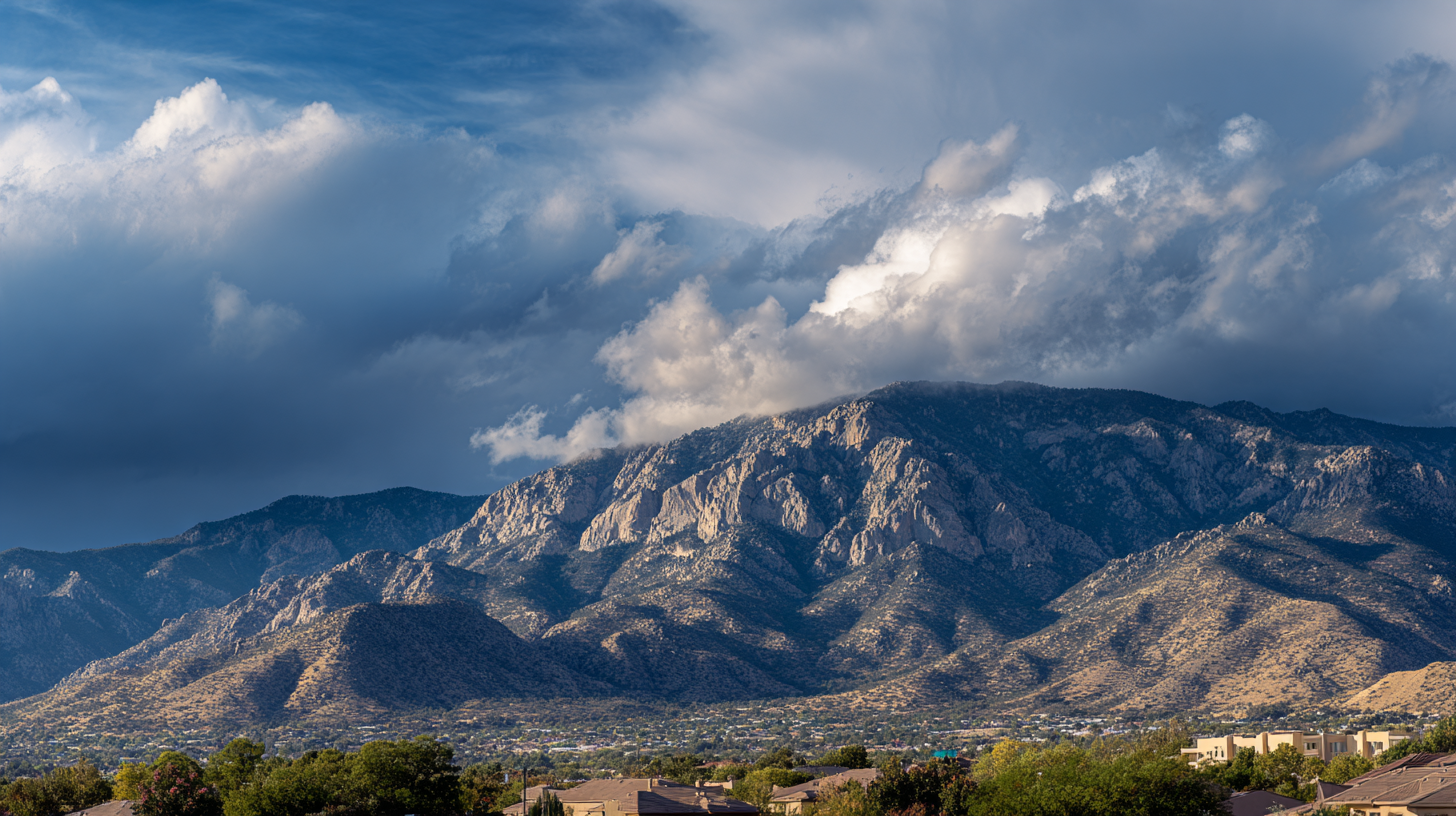
The market is defined by a few structural facts. The Sandia Mountains to the east and tribal and federal land to the north and south constrain growth, pushing new development west across the Rio Grande and south toward Mesa del Sol. The economy is less cyclical than most Sun Belt metros because its largest employers are government and institutional. And the state's economic development incentives, including the Local Economic Development Act (LEDA), the Job Training Incentive Program (JTIP), and one of the country's most generous film production tax credits, have brought in employers that are now reshaping industrial and flex demand.
What drives demand for commercial space in Albuquerque
- Federal and defense. Kirtland Air Force Base and Sandia National Laboratories together form one of the largest employment centers in the state, with a deep bench of defense and technology contractors leasing office, lab, and industrial space around the base and along the I-25 corridor.
- Health care. The University of New Mexico Health System, Presbyterian Healthcare Services, and Lovelace Health System drive steady medical office demand across the metro, including Rio Rancho's Rust Medical Center campus and the Westside.
- Higher education. UNM's main campus and health sciences center, plus Central New Mexico Community College, anchor the University and Midtown areas.
- Semiconductors and advanced manufacturing. Intel's Rio Rancho fab has operated since 1980 and its investment cycles ripple through housing, retail, and industrial demand on the northwest side.
- Film and media. Netflix's Albuquerque Studios at Mesa del Sol, along with a cluster of other production facilities, created a new category of demand for soundstages, mill space, warehouses, and flex buildings.
- Logistics and distribution. The I-25 and I-40 interchange gives Albuquerque a one-day truck radius to Phoenix, Denver, Dallas, and El Paso. Regional distribution users have steadily absorbed modern warehouse space.
- Government. The City of Albuquerque, Bernalillo County, the State of New Mexico, and Albuquerque Public Schools are major office and service-space occupiers, concentrated Downtown.
The practical effect: Albuquerque rarely sees the 20 percent swings in rent that boom-and-bust markets do. That is good for income investors and landlords, and it means value creation usually comes from buying well and operating well rather than from riding a cycle.
Asset classes: office, retail, industrial, land, and NNN
Industrial
Industrial has been Albuquerque's strongest-performing sector for several years. Vacancy has been tight across modern distribution, manufacturing, and flex product, driven by logistics users, film production, aerospace and defense contractors, and local service businesses. New construction has been concentrated near the Sunport, along the South I-25 corridor, in Mesa del Sol, and on the Westside and in Rio Rancho. Older infill industrial along Menaul, Candelaria, and the I-40 frontage trades as value-add and owner-user product. Our note on why industrial remains the strongest sector goes deeper.
Retail
Retail in Albuquerque follows rooftops. The Westside and Rio Rancho corridors (Coors, Paseo del Norte, Unser, Southern Boulevard) attract most new national-brand development. Uptown is the regional destination. The Northeast Heights is a stable service and grocery market. Older corridors along Central, Menaul, and San Mateo are repositioning. Single-tenant NNN pads leased to quick-service restaurants, dollar stores, auto parts, pharmacies, medical, and car washes make up a large share of retail investment sales, and they attract buyers from out of state because of the yield spread over coastal markets.
Office
Office is a tale of two markets. Suburban Class A and medical office along North I-25, in Journal Center, and in Uptown has held up on the strength of engineering, health-care, and professional tenants who want parking and freeway access. Downtown office carries structurally higher vacancy and is increasingly a conversion and mixed-use story. Tenants have leverage in most office negotiations; see our tenant's guide to lease negotiation.
Land
Developable land is scarce inside Albuquerque's eastern and central areas and plentiful on the Westside, in Rio Rancho, in the South Valley, in Mesa del Sol, and along the I-25 corridor toward Los Lunas and Belen. Entitlement, utilities, and drainage (arroyo and floodplain issues are common) determine land value as much as location. Our land transaction services cover site assemblage, zoning, and due diligence.
Multifamily
Multifamily is an active institutional asset class in the metro and often the property investors are exchanging out of when they come to us for NNN or industrial replacement property. Apartment owners facing rising insurance, taxes, and management costs are a steady source of 1031 exchange demand.
Albuquerque submarket guide
Every submarket below is one we have transacted in. The notes reflect how we think about each one when advising a buyer, seller, or tenant.
Uptown
Albuquerque's regional retail and office hub around Louisiana Boulevard, Menaul, and Indian School, anchored by Coronado Center, ABQ Uptown, and the Winrock redevelopment.
Primary uses: Regional and lifestyle retail, Class A and B office, hotels, medical office, restaurants, multifamily.
Broker's note: Highest-traffic retail trade area in the state. Office here competes with North I-25 on amenities. Team Southwest's office is in Uptown on Americas Parkway.
Downtown, Rail Yards, and Sawmill
The civic and legal core, with government, courts, the convention center, Civic Plaza, and a growing residential and brewery scene stretching into the Sawmill District and the historic Rail Yards.
Primary uses: Government and professional office, hospitality, adaptive reuse, mixed-use, event venues.
Broker's note: Office vacancy is structurally higher than suburban submarkets; value is in conversion and mixed-use plays and in proximity to the courts and city hall for professional users.
North I-25 Corridor and Journal Center
The suburban office center of the metro, running north from Montaño to Paseo del Norte along I-25, including Journal Center, the Jefferson corridor, and the Balloon Fiesta Park area.
Primary uses: Class A office, medical office, flex and R&D, hotels, back-office and call-center space, retail serving office workers.
Broker's note: Preferred location for engineering, technology, and health-care administrative tenants. Good freeway access to Rio Rancho's workforce and to the Sunport.
Northeast Heights
Albuquerque's most established residential quadrant, with retail corridors along Montgomery, San Mateo, Wyoming, Eubank, Academy, and Paseo del Norte near the Sandia foothills.
Primary uses: Neighborhood and community retail, grocery-anchored centers, medical and dental, service retail, NNN pads, small office.
Broker's note: Stable, high-income demographics support service retail and medical. Limited developable land means value sits in redevelopment of older centers.
Westside and Cottonwood
The fastest-growing residential area of the city, west of the Rio Grande, with retail concentrated along Coors Boulevard, Paseo del Norte, Unser, and the Cottonwood Mall area.
Primary uses: Community retail, quick-service restaurants, grocery, auto, medical, new NNN development, land.
Broker's note: Population growth continues to pull national retailers west. Pad sites on Coors and Paseo del Norte are among the most sought-after NNN development sites in the metro.
Rio Rancho
A separate city of more than 100,000 residents northwest of Albuquerque, home to Intel's manufacturing campus, Presbyterian Rust Medical Center, and the Unser and Southern Boulevard retail corridors.
Primary uses: Industrial and advanced manufacturing, medical, retail, office, large-tract land.
Broker's note: Intel's investment cycles move the local economy. Large tracts of entitled and unentitled land remain available compared with Albuquerque proper.
Airport, Sunport, and South I-25 Industrial
The metro's primary industrial district around the Albuquerque International Sunport, Kirtland Air Force Base, University Boulevard, and the I-25 and I-40 interchanges.
Primary uses: Warehouse and distribution, manufacturing, flex, aerospace and defense contractors, film production support, truck terminals.
Broker's note: Proximity to the Big I interchange, the airport, and Kirtland and Sandia makes this the core logistics and defense-contractor location. Industrial has been the strongest-performing sector in the metro for several years.
Mesa del Sol
A master-planned community south of the Sunport, home to Netflix's Albuquerque Studios production campus, Fidelity and other employers, and large blocks of entitled industrial and commercial land.
Primary uses: Film and media production, light industrial, build-to-suit office, land.
Broker's note: One of the few places in the metro with shovel-ready large-scale industrial land and modern infrastructure. Film-related demand drives flex and warehouse absorption.
University, Nob Hill, and Central Avenue
The University of New Mexico, UNM Hospital, and the historic Route 66 corridor through Nob Hill and the International District.
Primary uses: Medical office, student-oriented retail and housing, restaurants, small-format retail, adaptive reuse.
Broker's note: UNM and its hospital system are the dominant demand drivers. Central Avenue has seen reinvestment along the Albuquerque Rapid Transit corridor; results vary block by block.
Midtown and the Menaul and Carlisle corridors
The geographic center of the city between Downtown and Uptown, with older office and retail along Menaul, Carlisle, San Mateo, and the I-40 frontage.
Primary uses: Value-add office, light industrial and showroom, auto, discount and service retail, redevelopment sites.
Broker's note: Central location and lower basis make this a value-add and owner-user market. Many 1960s to 1980s buildings are candidates for repositioning.
Outside Albuquerque proper, we also work in Santa Fe (government, tourism, and high-income retail; tight supply and strict design review), Las Cruces (New Mexico State University, border and agricultural logistics, strong retail growth), and the Los Lunas and Belen corridor (industrial and distribution growth along I-25 south of the metro). See top commercial growth areas in Albuquerque for the current list of active development nodes.
How to buy commercial property in Albuquerque
- Define the thesis. Income (NNN, stabilized multi-tenant), value-add (lease-up, repositioning), owner-user, or development. Each has a different buyer pool, lender set, and due diligence scope.
- Get access to the whole market. Public listings on LoopNet and Crexi show part of the inventory. A broker who represents buyers can also surface off-market and pre-market opportunities, which is where most of the best Albuquerque investment deals trade. In most cases the seller pays the commission, so buyer representation costs you nothing directly.
- Underwrite conservatively. Verify rents against the leases, not the offering memorandum. Check property tax reassessment at your purchase price, insurance quotes (premiums have risen sharply), and realistic market rent for any vacancy.
- Line up financing early. Local and regional banks are active lenders on owner-user and smaller investment deals. Life companies and CMBS lenders finance larger stabilized assets, especially credit NNN. SBA 504 and 7(a) programs work well for owner-users.
- Letter of intent, then contract. Albuquerque deals typically move from LOI to a purchase agreement in one to three weeks, with 30 to 60 days of due diligence and 15 to 30 days to close after that.
- Due diligence. Title and survey (ALTA), Phase I environmental, property condition report, zoning verification, lease and estoppel review, and a look at any pending city or county infrastructure projects nearby.
- Close. New Mexico closings run through title companies. There is no state transfer tax. Expect title insurance, recording fees, lender costs, and prorations of rent and taxes.
Our investment sales and acquisitions page describes how we represent buyers through each step.
How to lease commercial space in Albuquerque
Businesses leasing space in Albuquerque should expect: base rent quoted per square foot per year; NNN or modified gross expense structures depending on property type; tenant improvement allowances and free rent that vary with term and credit; and lease terms of three to ten years for office and retail and five to ten for industrial. Landlords typically pay both the listing and the tenant's broker, so a tenant representative who works only for you is available at no direct cost. Site selection should start three to twelve months before your current lease expires, longer for build-to-suit or industrial with specialized power or dock requirements. Read the tenant's guide to commercial lease negotiation and our tenant representation page.
How to sell commercial property in Albuquerque
The Albuquerque buyer pool is a mix of local investors and owner-users, regional and California 1031 exchange buyers, and national net lease and industrial funds. Which group you market to determines pricing, timing, and certainty of close. A strong sale process includes a broker opinion of value grounded in actual closed comps, a complete due diligence package assembled before launch (leases, financials, survey, Phase I, title), targeted marketing to the right buyer set, and disciplined qualification of offers for financing certainty. Owners selling and exchanging should also read our 1031 guide, since the replacement search needs to start before the sale closes. See landlord representation for leasing and investment sales for dispositions.
Zoning, entitlements, and the IDO
The City of Albuquerque regulates land use through the Integrated Development Ordinance (IDO), which took effect in 2018 and replaced a patchwork of sector plans and older zone codes. The IDO organizes zoning into residential (R) districts, mixed-use districts (MX-T, MX-L, MX-M, MX-H, with intensity rising from transitional to high), and non-residential districts (NR-C commercial, NR-BP business park, NR-LM light manufacturing, NR-GM general manufacturing, and others), plus special-purpose zones. Most commercial corridors are MX-M or MX-H; most industrial areas are NR-LM or NR-GM.
Many uses are permissive by right, but conditional uses, site plan review for larger projects, and development along designated corridors or near sensitive lands can require hearings before the Environmental Planning Commission or an administrative review process. Bernalillo County, Rio Rancho, Los Ranchos, and other jurisdictions have their own codes. Floodplain, arroyo, and drainage requirements through AMAFCA frequently affect site design and cost on the Westside and in the valley. Confirm zoning with a zoning verification letter before you go under contract, and budget realistic time for any entitlement step. Our market research and site selection work includes this review.
Taxes and transaction costs in New Mexico
- No real estate transfer tax. New Mexico does not tax the transfer of real property, which lowers closing costs relative to many states.
- Property tax. Assessed by the county assessor. Taxable value is one-third of assessed (market) value, multiplied by the local mill rate, which varies by location within Bernalillo, Sandoval, and Valencia counties. Commercial property can be reassessed to the sale price after a transfer, so underwrite taxes at your purchase price rather than the seller's bill.
- Gross receipts tax (GRT). New Mexico's GRT applies to most services, including brokerage commissions and many construction and professional services. Rent on real property leases is generally deductible from gross receipts and therefore not taxed, though certain lease-related charges and short-term lodging are treated differently.
- Income tax. New Mexico taxes capital gains as ordinary income at rates up to 5.9 percent; since tax year 2025 the general capital gains deduction is capped at $2,500. A 1031 exchange defers both federal and state tax on a qualifying sale.
- Title and closing. Title insurance premiums in New Mexico are set by the state's Office of Superintendent of Insurance, so they do not vary by title company. Buyers and sellers typically split closing fees by custom and negotiation.
This is general information, not tax or legal advice. Confirm details with your CPA, attorney, and qualified intermediary before acting.
What to watch in the Albuquerque market
- Interest rates and cap rates. Albuquerque cap rates follow national rates with a lag. When borrowing costs stabilize, the yield spread over primary markets tends to pull capital in.
- Industrial supply. New speculative and build-to-suit industrial deliveries near the Sunport, in Mesa del Sol, and on the Westside will test whether demand from logistics and film users keeps pace.
- Film production volume. Studio and production activity directly affects flex and warehouse absorption south of the airport.
- Intel and advanced manufacturing. Capital investment at the Rio Rancho fab and any new semiconductor supply-chain employers drive demand in Sandoval County.
- Downtown conversion. Office-to-residential and hospitality conversions will set the direction for Downtown's older office stock.
- Insurance and property tax growth. Both have risen faster than rents in recent years and are now central to every underwriting model.
For current-cycle commentary, read the Albuquerque commercial real estate market outlook and our other market insights.