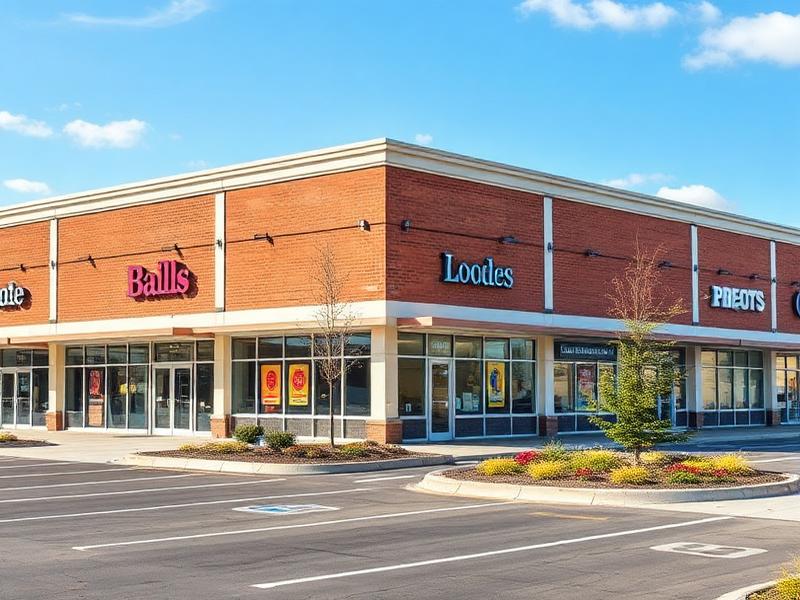
Albuquerque's retail corridors
Albuquerque's retail is organized around arterials rather than a single core. On the Westside, Coors Boulevard, Paseo del Norte, Unser, and the Cottonwood area have absorbed most of the new national-brand development as the population has grown west of the river. In Rio Rancho, Southern Boulevard, Unser, and NM 528 serve the same growth. Uptown, around Coronado Center, ABQ Uptown, and the Winrock redevelopment, is the regional and lifestyle destination with the highest traffic in the state.
The Northeast Heights, along Montgomery, San Mateo, Wyoming, Eubank, Academy, and Paseo del Norte, is a mature, high-income market built around grocery anchors, service retail, medical, and restaurants. Nob Hill and Central Avenue near the university are neighborhood retail and dining with historic storefronts. Older corridors along Menaul, San Mateo, and the I-40 frontage are value-add and redevelopment territory, and the International District along Central is a reinvestment area.
Retail property types in the metro
The metro has every retail format: regional malls and lifestyle centers in Uptown, grocery-anchored community centers across the Heights and Westside, unanchored strip centers along every arterial, single-tenant pad buildings for restaurants, banks, pharmacies, and auto uses, and freestanding big-box and discount stores. For investors, the two most active categories are grocery-anchored centers, which trade to regional and institutional buyers, and single-tenant NNN pads, which trade to private and 1031 exchange buyers nationally.
How Albuquerque retail leases work
Retail leases in Albuquerque are almost always NNN. The tenant pays base rent plus a pro rata share of common area maintenance (CAM), property taxes, and insurance. Anchor tenants and some restaurants pay percentage rent, a share of sales above a negotiated breakpoint, in addition to or instead of a portion of base rent. Terms run five to ten years for inline tenants and ten to twenty for anchors and pad users.
The terms that cause disputes later are rarely about rent. Exclusive-use clauses protect a tenant from a direct competitor in the same center. Co-tenancy clauses let a tenant reduce rent or leave if an anchor goes dark. Signage rights, parking field control, hours of operation, and assignment rights all deserve attention. Landlords should be careful about granting exclusives that limit future leasing; tenants should insist on the ones their business depends on.
- Audit CAM reconciliations annually; caps on controllable CAM are negotiable.
- Confirm who maintains roof, structure, HVAC, and parking lot in a multi-tenant center.
- Secure monument and building signage rights in the lease, not by handshake.
- Negotiate tenant improvement allowance and free rent against term and credit.
- Check the center's existing exclusives before committing to a use.
Pad sites and build-to-suit retail
Pad sites, the small parcels at the edge of a shopping center or along a major road, are the most sought-after retail development parcels in Albuquerque. Quick-service restaurants with drive-thrus, banks, pharmacies, auto parts stores, car washes, and medical clinics compete for hard corners with signalized access on Coors, Paseo del Norte, Montgomery, and the Rio Rancho corridors. A pad can be ground-leased to the operator, sold outright, or developed build-to-suit by a landlord who then owns a single-tenant NNN property. Zoning under the IDO, access and curb cuts, drive-thru stacking, and reciprocal easement agreements with the adjacent center determine whether a pad works.
Investing in Albuquerque retail
Retail investment in the metro splits into two strategies. Single-tenant NNN retail leased to national operators offers passive income and deep buyer demand, and Albuquerque assets often price 25 to 75 basis points wider than coastal markets for the same tenant. Multi-tenant centers, from grocery-anchored to unanchored strips, offer higher yields and value-add potential through leasing, re-tenanting, and pad development, with more management.
In both cases, underwrite the real estate as well as the rent: trade-area growth, traffic counts, co-tenancy, tenant sales where available, remaining lease term, and what the property would rent for if the current tenant left. The NNN properties guide covers single-tenant underwriting in depth.
Have a question this page does not answer? Contact Team Southwest or call us; a broker, not a form, will respond.